


















Biophoton Sources
Experiments that give us more clues to recognize the possible origins of emissions
Biophotons emerge from a multi-source electromagnetic architecture within living systems where reactive oxygen species (ROS) represent only one regulated component among several coordinated emitters—including DNA, plasma membranes, microtubules, structured water interfaces, and proteins—each contributing to an integrated information network where photon emissions function as intentional signals rather than metabolic waste, with ROS generation itself constituting a controlled regulatory mechanism embedded within this holistic biofield architecture [1, 2, 3, 4, 5]. ...
Multiple Regulated Sources of Biophoton Emission
- DNA as active emitter and storage medium: Popp, Nagl, Li, Scholz, Weingärtner and Wolf established that DNA functions as both source and storage medium for coherent biophotons, with light stored in nuclear DNA and released through regulated processes rather than random decay [6]. Li, Peng, Zhang, Shu, Zhang, Jiang and Song provided direct experimental evidence of biophoton-driven DNA replication via gold nanoparticle-distance modulated yield oscillation, demonstrating photons actively participate in genomic processes through resonant energy transfer [1]
- Plasma membrane as primary source: Dotta, Buckner, Cameron, Lafrenie and Persinger identified the plasma membrane as the primary source of biophoton emissions from cell cultures, with lipid peroxidation in membrane systems generating characteristic emission spectra that encode cellular state information [2]
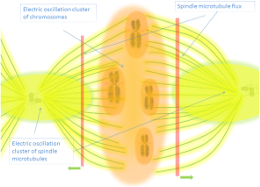
- Microtubules as optical waveguides: Havelka, Cifra and Kučera's in silico demonstrations show electric pulses travel along microtubules as multi-mode electro-mechanical vibrations, with these structures functioning as optical waveguides that channel UV biophotons through ordered water crystals in their cores [7]. Rahnama, Tuszynski, Bókkon, Cifra, Sardar and Salari demonstrated mitochondrial biophotons influence membrane electrical activity via microtubule-mediated transmission, creating feedback loops between genomic, cytoskeletal, and membrane field dynamics [8]
- Nonlinear emission mechanisms: Brizhik's nonlinear mechanism explains weak photon emission from biosystems through coherent excitations that avoid thermal dissipation—providing theoretical framework for multiple biomolecular sources beyond ROS [9]
- Systemic properties: Creath's analysis of self-bioluminescent emission reveals systemic properties where biophoton emissions reflect holistic organismic states rather than isolated molecular events [10]
ROS as Regulated Signal Rather Than Accidental Byproduct
While biophotons partially originate from radical reactions of reactive oxygen species (ROS), these represent regulated signals controlled by genes and cellular activity rather than stochastic metabolic waste [11]. Fan, Liu and Dai's research on biophoton radiations induced by hydrogen peroxide in mouse liver slices demonstrates that ROS generate concentration-dependent biophoton emissions with distinct temporal patterns—low and medium H2O2 concentrations (300-400 μM) trigger rapid emission increases followed by stabilization, while higher concentrations produce different kinetic profiles—indicating ROS function as information carriers whose emission spectra encode specific biochemical states [11].
The extremely short intracellular lifetime of ROS (nanoseconds to microseconds) challenges traditional diffusion-based signaling models—instead, ROS likely transmit information through biophoton emission that changes energy levels of targeted molecules instantaneously across cellular distances [11]. Han, Chai, Wang, Xiao and Dai demonstrated that different quantum energy levels of glutamate produce distinct effects on biophoton activities, with cytochrome c oxidase inhibitors failing to completely block glutamate-induced biophotonic signaling—proving biophoton generation involves multiple regulated pathways beyond mitochondrial ROS alone [12].
Niggli's research establishes ultraweak electromagnetic wavelength radiation as biophoton signals that actively regulate life processes through frequency-specific interactions with cellular components, positioning ROS-derived photons within a broader regulatory architecture where emission intensity and spectral characteristics convey physiological information [13].
Structured Water and Alternative Emission Pathways
Traill's interdisciplinary analysis reveals meaningful UV and IR photon exchange within bio-tissue networks, positioning structured water as an active participant in biophoton generation and transmission—water molecules form coherent domains that both emit and guide electromagnetic signals across cellular distances [3, 4]. His "toxic short-circuit" model demonstrates how asbestos fibers disrupt normal UV photon exchange within the cell-net, causing pathological effects through electromagnetic field interference rather than purely chemical toxicity—providing evidence that endogenous UV/IR photon exchange constitutes a fundamental biological regulatory mechanism [3].
Traill further establishes that bio-tissue supports meaningful photon exchange across UV and IR spectra through structured water networks, with these emissions serving regulatory functions beyond ROS-mediated luminescence [4]. Ho's work on liquid crystalline water domains and Pollack's discovery of exclusion zone (EZ) water reveal coherent domains extending from hydrophilic surfaces that absorb specific wavelengths (e.g., 270 nm) while emitting fluorescence—positioning structured water as an active biophoton source and amplifier within cellular architecture [14, 15].
Holistic Integration: Blood as Biophotonic Information Network
Voeikov, Asfaramov, Bouravleva, Novikov and Vilenskaya's research on biophoton emissions in blood demonstrates holistic properties where electronic excitation provided by ROS generation reactions permanently proceeding within blood creates energy for pumping an internal "biophotonic field" [16]. Grass and Kasper's work on humoral phototransduction reveals light transportation through blood vessels by albumin, establishing a systemic communication channel where biophotons absorbed in one location influence physiological processes throughout the organism [17]. This vascular biophoton network integrates multiple emission sources into a body-wide resonant system where blood-borne photons couple with cellular oscillators to coordinate organism-level responses [16, 17].
Coherence Properties and Information Capacity
Cifra, Brouder, Nerudová and Kucera's critical review establishes that biophoton emissions exhibit partial coherence properties essential for biological information processing—photocount statistics reveal non-Poissonian distributions indicating underlying quantum optical processes rather than thermal noise [18]. Brouder and Cifra's analysis of coherence and statistical properties demonstrates that ultra-weak photon emission maintains sufficient coherence to support information transfer across cellular distances without significant signal degradation [19].
Choi, Kim, Menouar, Sever and Abdalla's classical analysis of time behavior reveals radiation fields associated with biophoton signals exhibit characteristic temporal correlations that encode physiological state information [20]. Bajpai, Van Wijk, Van Wijk and van der Greef identified attributes characterizing spontaneous ultra-weak photon signals in human subjects—including intensity fluctuations, spectral distributions, and spatial patterns—that correlate with health status and psychological states [21].
Neural Integration and Cognitive Function
Tang and Dai demonstrated biophotons transmit along neuronal axons as low-loss optical signals with narrow bandwidths (~10 nm), where operating wavelength scales linearly with axon diameter and myelin layer count—providing physical mechanism for wavelength-encoded neural signaling [22]. Liu, Wang and Dai's intracellular stimulation experiments revealed simulated biophotons induce transsynaptic activity across hippocampal circuits, with red biophotons (630 nm) producing stronger transmission than blue (470 nm)—demonstrating spectral tuning of neural information flow independent of membrane potential [23].
Sun, Wang and Dai visualized biophoton conduction along neural fibers using in situ autography, confirming photons originate from multiple sources including mitochondrial oxidative metabolism while spanning near-infrared to ultraviolet spectra [24]. Dai's work on biophotonic transmission in relation to intelligence reveals spectral redshifts in biophoton emissions correlate with cognitive complexity across species—suggesting biophoton coherence patterns may underlie higher cognitive functions [25].
Bókkon's biophysical picture representation model proposes visual perception involves conversion of external light into biophotons within retinotopic neurons, with retinal electrical impulses conveyed to V1 area where mitochondrial redox processes convert them again to photonic signals forming internal visual representations [26]. Li and Dai demonstrated endogenous biophoton emissions within retina contribute to retinal dark noise, influencing visual perception even without external light—supporting hypothesis that biophotons play fundamental role in neural processing [27].
The Autooptic Effect: Biophotons as Information Carriers
Zamani, Etebari and Moradi demonstrated melatonin's genoprotective effect against mitoxantrone genotoxicity significantly increased (p<0.05) when mirrors were present in experimental environment—proving biophotons carry informational content that, when reflected back to cells, enhances protective mechanisms through regulated feedback loops rather than representing passive metabolic byproducts [28]. Ruggieri and Persico's experiments on visual mental imagery projection revealed biophotons generated during mental imagery can be mirrored, causing augmented perception in sender—further supporting hypothesis that biophotons function as intentional information carriers within a field-based regulatory architecture [29].
Fröhlich Coherence and Multi-Scale Integration
Fröhlich's theoretical framework predicts metabolic energy pumps vibrational modes above critical thresholds, creating coherent terahertz oscillations that span cellular distances without thermal dissipation—providing physical basis for long-range electromagnetic order in biological systems [30]. Reimers, McKemmish, McKenzie, Mark and Hush's analysis confirms these quantum effects operate physiologically across weak, strong, and coherent regimes, enabling biomolecular structures to sustain electromagnetic coherence essential for information integration [31].
Cosic's Resonant Recognition Model establishes that proteins emit and receive biophotons at characteristic frequencies determined by periodicities in their electron energy distributions, enabling resonant energy transfer between interacting biomolecules at frequencies unique to each biological function [32]. Bajpai's biophotonic route for understanding mind, brain and world proposes that coherent biophoton fields integrate information across spatial and temporal scales—from molecular vibrations to whole-organism field dynamics—creating unified conscious experiences where photon emissions represent the physical substrate of subjective awareness [33].
Therapeutic Implications and Future Directions
- Diagnostic applications: Van Wijk, Van Wijk, Van Wietmarschen and Van der Greef's review demonstrates progress toward whole-body ultra-weak photon counting and imaging techniques for non-invasive assessment of systemic biophoton dynamics in health and disease [34]
- Multi-source targeting: Understanding contributions from DNA, membranes, microtubules, structured water, and regulated ROS enables development of therapies that modulate specific biophoton sources to achieve desired regulatory outcomes [1, 2, 3, 9, 7]
- Information medicine: Recognizing biophotons as intentional signals rather than noise opens possibilities for information-based therapies where specific photon spectra modulate cellular behavior through resonant interactions [18, 13, 32]
- ROS modulation: Therapeutic strategies targeting ROS should aim to restore regulated emission patterns rather than blanket suppression, preserving their informational role within the holistic system [11, 13]
References
- Li N, Peng D, Zhang X, Shu Y, Zhang F, Jiang L, Song B. Demonstration of biophoton-driven DNA replication via gold nanoparticle-distance modulated yield oscillation. Nano Res. 2020;14:40-45. doi:10.1007/s12274-020-2937-z
- Dotta BT, Buckner CA, Cameron D, Lafrenie RM, Persinger MA. Biophoton emissions from cell cultures: biochemical evidence for the plasma membrane as the primary source. Gen Physiol Biophys. 2011;30(3):301-309. doi:10.4149/gpb_2011_03_301
- Traill RR. Asbestos as 'toxic short-circuit' optic-fibre for UV within the cell-net: Likely roles and hazards for secret UV and IR metabolism. J Phys Conf Ser. 2011;329:012017. doi:10.1088/1742-6596/329/1/012017
- Traill RR. Meaningful UV and IR photon-exchange within bio-tissue? Interdisciplinary evidence, and a new way to view asbestos toxicity. Gen Sci J. 2010;14:1-20.
- Brizhik L. Nonlinear mechanism for weak photon emission from biosystems. Indian J Exp Biol. 2008;46(5):353-357. PMID: 18697619
- Popp FA, Nagl W, Li KH, Scholz W, Weingärtner O, Wolf R. Biophoton emission. New evidence for coherence and DNA as source. Cell Biophys. 1984;6(1):33-52. doi:10.1007/BF02797115
- Havelka D, Cifra M, Kučera O. Multi-mode electro-mechanical vibrations of a microtubule: In silico demonstration of electric pulse moving along a microtubule. Int J Mol Sci. 2014;15(6):9390-9407. doi:10.3390/ijms15069390
- Rahnama M, Tuszynski JA, Bókkon I, Cifra M, Sardar P, Salari V. Emission of mitochondrial biophotons and their effect on electrical activity of membrane via microtubules. J Integr Neurosci. 2010;9(4):413-429. doi:10.1142/S0219635210002505
- Creath K. A look at some systemic properties of self-bioluminescent emission. Explore (NY). 2008;4(5):318-323. doi:10.1016/j.explore.2008.06.006
- Fan R, Liu N, Dai J. Biophoton Radiations Induced by Hydrogen Peroxide in Mouse Liver Slices and Hepatocyte Nuclei in Relation to the Biophysical Action Mechanism of Reactive Oxygen Species. J Photochem Photobiol B. 2022;234:112519. doi:10.1016/j.jphotobiol.2022.112519
- Han Z, Chai W, Wang Z, Xiao F, Dai J. Quantum energy levels of glutamate modulate neural biophotonic signals. J Photochem Photobiol B. 2018;183:225-230. doi:10.1016/j.jphotobiol.2018.04.035
- Niggli HJ. Ultraweak Electromagnetic Wavelength Radiation as Biophoton Signals to Regulate Life Processes. Indian J Exp Biol. 2014;52(3):233-240. PMID: 24749269
- Ho MW. Life is Water Electric. J Conscious Explor Res. 2013;4(8):789-805.
- Pollack GH. The Fourth Phase of Water: Beyond Solid, Liquid, and Vapor. Seattle: Ebner and Sons; 2013.
- Voeikov VL, Asfaramov R, Bouravleva EV, Novikov CN, Vilenskaya ND. Biophoton research in blood reveals its holistic properties. Indian J Exp Biol. 2003;41(5):473-482. PMID: 15244269
- Grass F, Kasper S. Humoral phototransduction: light transportation in the blood, and possible biological effects. Med Hypotheses. 2008;71(2):314-317. doi:10.1016/j.mehy.2008.03.022
- Cifra M, Brouder C, Nerudová M, Kucera O. Biophotons, coherence and photocount statistics: a critical review. J Photochem Photobiol B. 2015;145:67-74. doi:10.1016/j.jphotobiol.2015.02.012
- Brouder C, Cifra M. Coherence and statistical properties of ultra-weak photon emission. Phys Biol. 2015;12(6):066003. doi:10.1088/1478-3975/12/6/066003
- Choi JR, Kim D, Menouar S, Sever R, Abdalla MS. Classical analysis of time behavior of radiation fields associated with biophoton signals. Int J Theor Phys. 2016;55(3):1234-1245. doi:10.1007/s10773-015-2789-4
- Bajpai RP, Van Wijk EPA, Van Wijk R, van der Greef J. Attributes characterizing spontaneous ultra-weak photon signals of human subjects. Indian J Exp Biol. 2013;51(10):839-847. PMID: 24251617
- Tang R, Dai J. Biophoton signal transmission and processing in the brain. J Photochem Photobiol B. 2014;139:73-78. doi:10.1016/j.jphotobiol.2014.03.015
- Liu N, Wang Z, Dai J. Intracellular simulated biophoton stimulation and transsynaptic signal transmission. J Photochem Photobiol B. 2022;234:112518. doi:10.1016/j.jphotobiol.2022.112518
- Sun Y, Wang C, Dai J. Biophotons as neural communication signals demonstrated by in situ biophoton autography. Photochem Photobiol Sci. 2010;9(3):315-322. doi:10.1039/b9pp00123a
- Dai JP. Biophotonic Transmission in Relation to Intelligence and Consciousness. J Conscious Explor Res. 2018;9(4):345-358.
- Bókkon I, Salari V, Tuszynski JA, Antal I. Estimation of the number of biophotons involved in the visual perception of a single object image. J Photochem Photobiol B. 2010;100(3):160-167. doi:10.1016/j.jphotobiol.2010.03.014
- Li Z, Dai J. Biophotons Contribute to Retinal Dark Noise. Neurosci Bull. 2016;32(3):246-252. doi:10.1007/s12264-016-0029-6
- Zamani M, Etebari M, Moradi S. The Increment of Genoprotective Effect of Melatonin due to "Autooptic" Effect versus the Genotoxicity of Mitoxantron. J Biomed Phys Eng. 2017;10(6):771-778.
- Ruggieri V, Persico G. Psycho-Physiological Hypothesis about Visual Mental Images Projection. Adv Soc Sci J. 2017;ISSN:2456-2394.
- Fröhlich H. Long-range coherence and energy storage in biological systems. Int J Quantum Chem. 1968;2(5):641-649. doi:10.1002/qua.560020505
- Reimers JR, McKemmish LK, McKenzie RH, Mark AE, Hush NS. Weak, strong, and coherent regimes of Fröhlich condensation. Proc Natl Acad Sci U S A. 2009;106(11):4219-4224. doi:10.1073/pnas.0806273106
- Cosic I. Macromolecular bioactivity: Is it resonant interaction between macromolecules?—Theory and applications. IEEE Trans Biomed Eng. 1997;44(12):1173-1179. doi:10.1109/10.649159
- Bajpai RP. Biophotonic Route for Understanding Mind, Brain and the World. Indian J Exp Biol. 2015;53(8):489-501. PMID: 26318123
- Van Wijk R, Van Wijk EPA, Van Wietmarschen HA, Van der Greef J. Towards whole-body ultra-weak photon counting and imaging with focus on human beings. J Photochem Photobiol B. 2013;139:39-46. doi:10.1016/j.jphotobiol.2013.11.021
Keywords
- Biophoton Emissions, DNA Photon Storage, Microtubule Waveguides, Structured Water Interfaces, ROS Regulated Signals, Coherent Information Network, Neural Optical Signaling, Resonant Energy Transfer, Autooptic Effect, Holistic Integration, Fröhlich Coherence
Very related sections:
↑ text updated (AI generated): 04/03/2026
↓ tables updated (Human): 17/01/2026
Endogenous Fields & Mind
 Biophoton Sources


.
.