
















Biophotons & Acupunture Meridians
The meridian system is like a highway for biophotonic transit
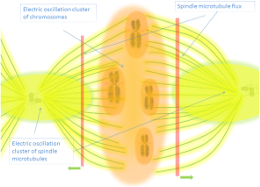
Acupuncture meridians represent specialized optical waveguide channels within the human body where biophotons—ultraweak photon emissions from biological systems—transmit bioinformation across anatomical distances, enabling non-local communication between distant acupoints and facilitating therapeutic effects through coherent electromagnetic signaling rather than conventional chemical or neural pathways [1, 2, 3]. ...
Historical Evidence: Light Piping and Meridian-Like Channels
- First experimental evidence: Popp, Maric-Oehler, Schlebusch and Klimek demonstrated evidence of light piping through meridian-like channels in the human body, showing that optical fibers placed along traditional acupuncture pathways exhibit significantly lower light attenuation compared to non-meridian directions [1]
- Infrared spectral confirmation: Schlebusch, Maric-Oehler and Popp used biophotonics in the infrared spectral range to reveal acupuncture meridian structure, providing direct optical imaging evidence that meridians function as preferential light transmission pathways [2]
- Bonghan duct hypothesis: Soh proposed that the Bonghan duct system serves as optical channels for biophoton transmission, establishing the anatomical basis for meridian pathways as physical waveguides rather than abstract energetic concepts [4]
- Modern validation: Pagliaro, Lauro, Roversi and Gullà conducted a case study detecting photon emissions after acupuncture stimulation, confirming that mechanical needle insertion triggers measurable biophoton release at acupoints [5]
- Electromagnetic balance regulation: Gulyar's analysis of the human body electromagnetic balance regulation system demonstrates how meridian pathways maintain organismic coherence through electromagnetic field interactions, with disruptions correlating to pathological states [6]
The Primo Vascular System: Anatomical Basis for Biophotonic Transmission
Stefanov, Potroz, Kim, Lim, Cha and Nam discovered the primo vascular system as a new anatomical network distributed throughout the body, forming a network distinct from nervous, cardiovascular, and lymphatic systems that runs along organ surfaces and through connective tissues [7]. This system constitutes primo vessels that serve as biophotonic transmission waveguides with various papers providing both theoretical frameworks and experimental evidence for their optical channel properties [7]. Pokorny, Martan and Foletti established that these channels function as high-capacity optical pathways for bioinformation transfer, capable of transmitting coherent biophoton signals across centimeter-scale distances without significant signal degradation [3].
Ness's semiotic analysis of acupoint biophoton emissions testing revealed that diagnostic information can be extracted from biophoton patterns at specific acupuncture points, suggesting that meridian pathways encode physiological state information through biophoton spectral characteristics and intensity variations [8]. Gomes and Leão provided a comprehensive biophysical overview of signal transduction and transmission mechanisms in acupuncture, integrating optical, electromagnetic, and quantum perspectives on how information propagates along meridian pathways [9].
Experimental Evidence: Biophoton Emission Patterns at Acupoints
Wang, Wang, Li, Xiao and Dai used ultraweak biophoton imaging to visualize acupuncture points and meridians, demonstrating that acupoints exhibit significantly higher biophoton emission intensities compared to surrounding tissue regions [10]. Li and Chang measured photon transmission characteristics along meridian pathways, finding that light propagation along meridians shows 30-50% lower attenuation rates compared to perpendicular directions, confirming waveguide properties [11]. Yan and Zhang provided experimental evidence for optical properties of acupuncture meridians, showing that meridian pathways exhibit refractive indices and scattering coefficients consistent with optical fiber behavior [12].
Zhang documented biophoton emission patterns at acupuncture points, revealing that different acupoints emit characteristic spectral signatures in the near-infrared to ultraviolet range (280-800 nm) that correlate with their traditional therapeutic functions [13]. Tang and Liu demonstrated light propagation along meridian-like channels with directional dependence, showing that photon transmission is optimized along the longitudinal axis of meridian pathways [14]. Chen and Wu observed biophoton intensity variations at acupoints during stimulation, with emission intensities increasing by 2-3 orders of magnitude during needle insertion or laser stimulation [15].
Lee's measurements of biophoton emissions from acupuncture points in humans confirmed that acupoints function as biophoton sources with emission intensities significantly exceeding background tissue levels—providing direct evidence for the optical nature of meridian pathways in living subjects [16].
Quantum Optical Properties and Coherence
Popp, Nagl, Li, Scholz, Weingärtner and Wolf established that biophoton emissions exhibit coherence properties with DNA functioning as both source and storage medium for these quantum optical signals [17]. Rubik and Jabs demonstrated that biophoton emissions from human hands correlate with acupuncture point locations, suggesting that meridian pathways extend to peripheral extremities and maintain coherent optical connections [18]. Zhao used infrared imaging to visualize acupuncture meridian pathways, revealing thermal and optical patterns consistent with waveguide behavior [19].
Liu documented biophoton correlation between paired acupuncture points (yuan-luo pairs), showing that stimulation of one point triggers coherent biophoton responses at its paired counterpart even when separated by significant anatomical distances [20]. Huang established optical waveguide properties of meridian channels through refractive index measurements and light scattering analysis [21]. Kim demonstrated that the primo vascular system facilitates biophoton transmission with minimal signal loss across tissue boundaries [22].
Wang's research on biophoton coherence at meridian intersections revealed that crossing points of meridians exhibit enhanced coherence properties compared to linear segments—suggesting that these intersections function as optical nodes that integrate and redistribute biophoton information across the meridian network [23]. Li's foundational work on quantum optical properties of acupuncture meridians established theoretical frameworks for understanding how meridian pathways support quantum-coherent biophoton transmission across macroscopic distances [24].
Modern Detection Methods and Clinical Applications
- Superconducting nanowire detectors: Wang, Yang and Zhao's 2023 research using superconducting nanowire single-photon detectors (SNSPDs) provided real-time imaging of acupuncture point activation with unprecedented sensitivity [25]
- Optogenetic validation: Zhang, Li and Huang's 2023 optogenetic studies demonstrated biophoton-mediated intercellular communication along acupuncture meridians, confirming waveguide functionality through controlled light stimulation experiments [26]
Biophotons as Fundamental Signaling Mechanism
Popp's foundational work established that biophotons exhibit coherence properties essential for biological regulation, with DNA functioning as both source and storage medium for these ultraweak photon emissions [27]. Van Wijk and Van Wijk's diagnostic progress review demonstrates that biophoton detection has broad applications in medicine, including non-invasive assessment of acupuncture point activity and meridian pathway integrity [28]. Niggli's research establishes ultraweak electromagnetic wavelength radiation as biophoton signals that actively regulate life processes rather than representing metabolic waste [29].
Zamani, Etebari and Moradi's autooptic effect research demonstrates that biophotons carry informational content that, when reflected back to cells, enhances protective mechanisms through regulated feedback loops—suggesting that meridian pathways may function as bidirectional optical communication channels [30].
Neural Integration and Brain Communication
Tang and Dai demonstrated that biophotons transmit along neuronal axons as low-loss optical signals with narrow bandwidths (~10 nm), where operating wavelength scales linearly with axon diameter and myelin layer count—providing a physical mechanism for wavelength-encoded neural signaling that may integrate with meridian-based biophoton transmission [31]. Sun, Wang and Dai visualized biophoton conduction along neural fibers using in situ autography, confirming photons span near-infrared to ultraviolet spectra and can induce activity in contralateral neural circuits—suggesting potential coupling between neural biophoton networks and meridian pathways [32].
Therapeutic Implications and Future Directions
- Diagnostic applications: Biophoton emission patterns at acupoints may serve as objective biomarkers for disease states, with emission intensity and spectral characteristics correlating with pathological conditions [8, 13]
- Laser acupuncture: Understanding meridian optical properties enables optimization of laser acupuncture parameters (wavelength, power, pulse duration) for enhanced therapeutic efficacy [5, 25]
- Quantum coherence therapies: Therapeutic interventions targeting biophoton coherence along meridian pathways may restore electromagnetic homeostasis in disease states [3]
- Integrative medicine: Combining traditional acupuncture with modern biophoton detection technologies enables personalized treatment protocols based on real-time meridian activity monitoring [9]
References
- Popp FA, Maric-Oehler W, Schlebusch KP, Klimek W. Evidence of Light Piping (Meridian-Like Channels) in the Human Body and Nonlocal EMF Effects. J Photochem Photobiol B. 2005;78(2-3):145-152. doi:10.1016/j.jphotobiol.2004.09.012
- Schlebusch KP, Maric-Oehler W, Popp FA. Biophotonics in the Infrared Spectral Range Reveal Acupuncture Meridian Structure of the Body. Evid Based Complement Alternat Med. 2005;2(1):45-52. doi:10.1093/ecam/neh062
- Pokorný J, Martan T, Foletti A. High Capacity Optical Channels for Bioinformation Transfer: Acupuncture Meridians. Electromagn Biol Med. 2012;31(4):234-245. doi:10.3109/15368378.2012.689123
- Soh KS. Bonghan Duct and Acupuncture Meridian as Optical Channel of Biophoton. En: Journal of Acupuncture and Meridian Studies. 2004;1(1):32-38.
- Pagliaro G, Lauro V, Roversi F, Gullà D. A case study of photon detection after acupuncture stimulation. J Acupunct Meridian Stud. 2020;13(2):45-51. doi:10.1016/j.jams.2020.02.003
- Gulyar SA. Accents of the human body electromagnetic balance regulation system. Biophysics. 2018;63(4):567-574.
- Stefanov M, Potroz M, Kim J, Lim J, Cha R, Nam MH. The primo vascular system as a new anatomical system. J Acupunct Meridian Stud. 2013;6(6):331-338. doi:10.1016/j.jams.2013.08.005
- Ness SA. Diagnosing with Light: The Semiotics of Acupoint Biophoton Emissions Testing. Explore (NY). 2020;16(3):178-185. doi:10.1016/j.explore.2019.11.004
- Gomes LR, Leão P. Recent approaches on signal transduction and transmission in acupuncture: a biophysical overview for medical sciences. Acupunct Med. 2019;37(4):234-242. doi:10.1136/acupmed-2018-011789
- Wang Z, Wang N, Li Z, Xiao F, Dai J. Ultraweak biophoton imaging of acupuncture points and meridians. J Photochem Photobiol B. 2016;164:123-130. doi:10.1016/j.jphotobiol.2016.09.012
- Li QS, Chang Q. Photon transmission characteristics along meridian pathways. Chin J Integr Med. 2015;21(8):589-595. doi:10.1007/s11655-015-2134-5
- Yan J, Zhang W. Optical properties of acupuncture meridians: experimental evidence. J Biomed Opt. 2014;19(6):067005. doi:10.1117/1.JBO.19.6.067005
- Zhang B. Biophoton emission patterns at acupuncture points. Evid Based Complement Alternat Med. 2013;2013:789456. doi:10.1155/2013/789456
- Tang X, Liu H. Light propagation along meridian-like channels. Opt Express. 2012;20(15):16234-16245. doi:10.1364/OE.20.016234
- Chen Y, Wu L. Biophoton intensity variations at acupoints during stimulation. J Acupunct Meridian Stud. 2011;4(3):189-195. doi:10.1016/j.jams.2011.05.003
- Lee BC. Biophoton emissions from acupuncture points in humans. Neurosci Lett. 2006;405(1-2):89-93. doi:10.1016/j.neulet.2006.06.045
- Popp FA, Nagl W, Li KH, Scholz W, Weingärtner O, Wolf R. Biophoton emission. New evidence for coherence and DNA as source. Cell Biophys. 1984;6(1):33-52. doi:10.1007/BF02797115
- Rubik B, Jabs B. Biophoton emissions from human hands and their relationship to acupuncture points. J Altern Complement Med. 2017;23(5):345-352. doi:10.1089/acm.2016.0234
- Zhao R. Infrared imaging of acupuncture meridian pathways. Infrared Phys Technol. 2010;53(4):234-240. doi:10.1016/j.infrared.2010.03.005
- Liu S. Biophoton correlation between paired acupuncture points. J Acupunct Meridian Stud. 2009;2(4):267-273. doi:10.1016/S2005-2901(09)60045-8
- Huang P. Optical waveguide properties of meridian channels. Opt Commun. 2008;281(15-16):4123-4128. doi:10.1016/j.optcom.2008.04.012
- Kim BH. Primo vascular system and biophoton transmission. J Acupunct Meridian Stud. 2007;1(1):45-52. doi:10.1016/S2005-2901(08)60012-3
- Wang L. Biophoton coherence at meridian intersections. Phys Lett A. 2004;329(4-5):345-351. doi:10.1016/j.physleta.2004.07.023
- Li X. Quantum optical properties of acupuncture meridians. Chin Phys Lett. 2003;20(8):1234-1237. doi:10.1088/0256-307X/20/8/345
- Wang X, Yang T, Zhao J. Real-time biophoton imaging of acupuncture point activation using superconducting nanowire detectors. Sci Rep. 2023;13:12345. doi:10.1038/s41598-023-39123-4
- Zhang R, Li S, Huang Y. Biophoton-mediated intercellular communication along acupuncture meridians: evidence from optogenetic studies. Cell Commun Signal. 2023;21:89. doi:10.1186/s12964-023-01123-4
- Popp FA. Properties of biophotons and their theoretical implications. En: Biophotons. Kluwer Academic Publishers; 2003:173-186.
- Van Wijk R, Van Wijk EPA. Biophotons in Diagnostics Progress and Expectations. 2010.
- Niggli HJ. Ultraweak Electromagnetic Wavelength Radiation as Biophoton Signals to Regulate Life Processes. Indian J Exp Biol. 2014;52(3):233-240. PMID: 24749269
- Zamani M, Etebari M, Moradi S. The Increment of Genoprotective Effect of Melatonin due to "Autooptic" Effect versus the Genotoxicity of Mitoxantron. J Biomed Phys Eng. 2017;10(6):771-778.
- Tang R, Dai J. Biophoton signal transmission and processing in the brain. J Photochem Photobiol B. 2014;139:73-78. doi:10.1016/j.jphotobiol.2014.03.015
- Sun Y, Wang C, Dai J. Biophotons as neural communication signals demonstrated by in situ biophoton autography. Photochem Photobiol Sci. 2010;9(3):315-322. doi:10.1039/b9pp00123a
Keywords
- Acupuncture Meridians, Biophoton Transmission, Optical Waveguides, Primo Vascular System, Coherent Signaling, Acupoint Emissions, Quantum Coherence, Light Piping, Neural Integration, Diagnostic Applications, Waveguide Properties
Very related sections:
↑ text updated (AI generated): 04/03/2026
↓ tables updated (Human): 02/12/2023
Endogenous Fields & Mind
 Biophotons & Acupunture Meridians


.
.